
Suicide prevention in prisons requires that administrations take into consideration several factors, such as environment design, mental health support and staff trained to recognise warning signs.
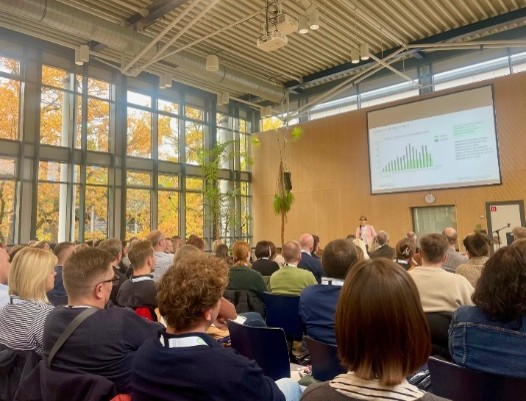
These were among the topics that European prison experts discussed at the Suicide Prevention Congress in Frankfurt, Germany, on 3-4 November 2026. Organised by the Federal Working Group on Suicide Prevention in Prisons (BAG), in cooperation with the German Society for Suicide Prevention (DGS), the congress brought together prison and health professionals, researchers and policymakers from Germany, Austria and Switzerland to examine how prevention strategies can be improved in practice. The experts worked together to strengthen these approaches and shared evidence and practical experience to help prevent deaths and self-harm.
From evidence to action
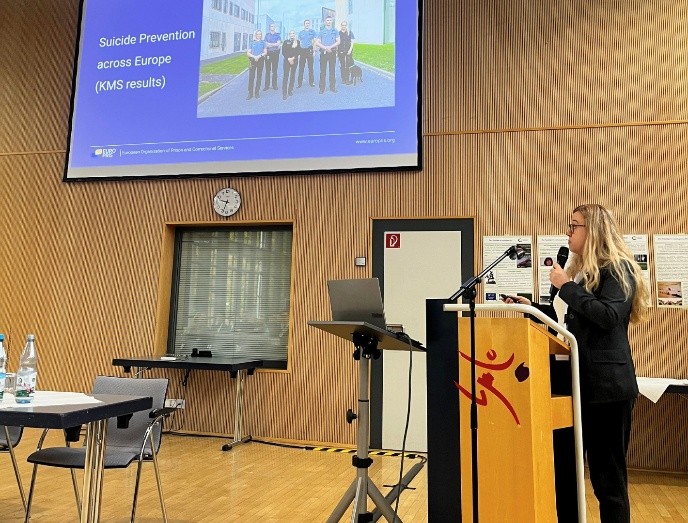
EuroPris Deputy Director Justina Dzienko presented developments from the organisation’s work across Europe and introduced its newly established Prisoner Health & Suicide Prevention Expert Group, which held its first meeting in September in The Hague. The group aims to develop practical outcomes and promote effective approaches to prisoner health and suicide prevention across Europe.
Furthermore, Dzienko presented findings from the organisation’s Knowledge Management System (KMS), highlighting data and developments in suicide prevention across several European countries.
Sharing this information helps prison administrations who face similar challenges to exchange practices for prevention and professionals to identify effective practices, understand emerging risks and improve their own responses. By bringing together professionals with different areas of expertise, the congress sought to strengthen cooperation and support prison administrations in addressing the health and safety needs of people in custody.
Understanding the risks
The congress’s programme explored several challenges that prison administrations are facing, from recognising early warning signs to creating environments that reduce opportunities for suicide and self-harm.
Presentations and workshops addressed evidence-based prevention strategies in different countries, the role of prison design in restricting access to means of suicide, screening procedures, suicide attempts and self-harming behaviour. Participants also examined mental health challenges and the factors that can increase a person’s vulnerability while in custody.
These discussions highlighted the need for a comprehensive approach. Preventing suicide in prison involves more than responding to an immediate crisis. It also requires effective screening, appropriate mental health support, humane living environments and cooperation between prison staff and healthcare professionals.
A European effort
The congress also brought together members of the EuroPris Expert Group, including Maja Meischner-Al-Mousawi from Germany, who was among the event’s organisers, and Hans Wolff from Switzerland, Co-Chair of the Expert Group.
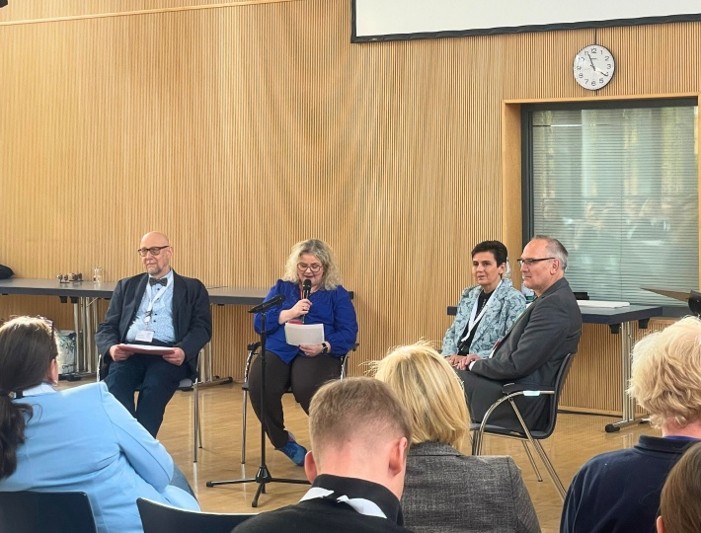
Their participation reflected the importance of connecting national experience with wider European cooperation. By sharing knowledge between prison administrations, health professionals and researchers, organisations can help develop approaches that respond to the complex realities of prison life.
For EuroPris, participation in the congress forms part of its broader commitment to improving prisoner health and supporting prison administrations through professional exchange and shared expertise. Strengthening the knowledge, cooperation and practical tools available to prison professionals is an important step towards safer prison environments and better protection of the health and lives of people in custody.
Learn more about the EuroPris Expert Group on Prisoner Health & Suicide Prevention.