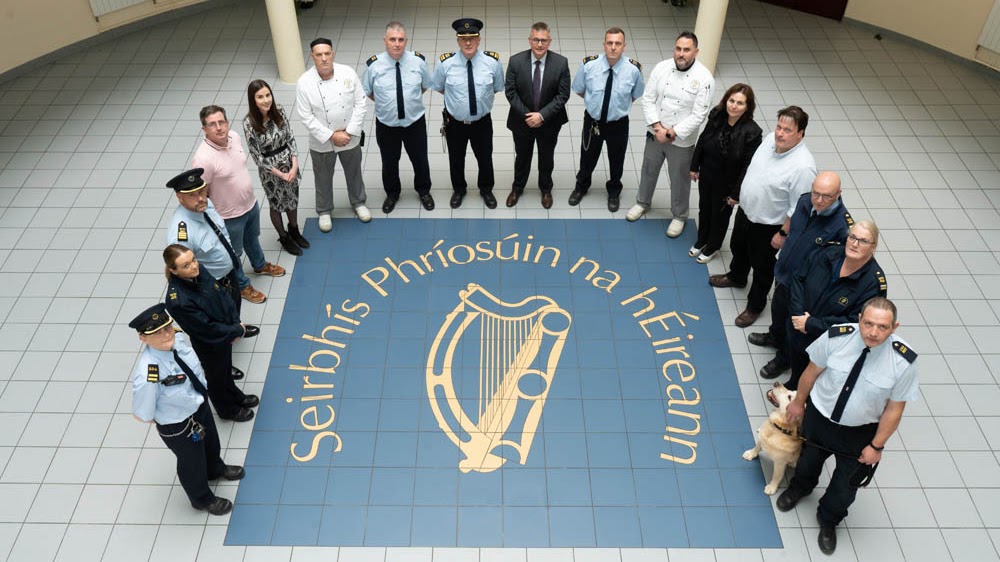
A brief overview of why this topic matters for staff wellbeing in prison services.
Encouraging help seeking is fundamental to safeguarding mental health in prison settings, where unpredictable incidents, emotional demands and exposure to distressing events are routine. When staff feel free to seek support early (without fear of judgement), issues are more likely to be addressed before they escalate. This could be reached through routine check-ins, confidential routes to support, and consistent messages from leadership. A culture that normalises seeking help builds resilience, improves team cohesion and supports safer, more sustainable operations in a prison environment.
Optional ideas informed by the EuroPris Staff Wellbeing Expert Group to help you explore the topic further and adapt approaches to your own prison service.
Promote help seeking as a positive behaviour to encourage early intervention, including clear leadership messages that normalise reaching out (e.g., senior leader communications emphasising “it’s okay to ask for help”).
Encourage uptake of counselling and peer support options to reduce isolation, including simple access routes and wide promotion (e.g., advertising confidential services and peer support volunteers in all staff areas).
Foster supportive team environments to strengthen mutual care, including activities that build team cohesion and trust (e.g., teambuilding or facilitated reflective sessions).
Highlight selfcare as essential to professional resilience, including visible messaging that reinforces the importance of mental and emotional maintenance (e.g., wellbeing campaigns via posters, newsletters highlighting rest, recovery and balance).
Promote healthy work–life balance to sustain wellbeing, including predictable rest periods, protected breaks and reduced after hour demands (e.g., commitments to limit non urgent contact outside shifts, flexible scheduling, days-off schedules in advance).
Build staff mental health capability through professional learning, including training in stress management, conflict resolution and CBT (cognitive behavioural therapy) based coping skills (e.g., in-house or external workshops on reframing techniques, suicide prevention, generational differences at work and recognising cognitive distortions).
Use positive stories and role modelling to reduce stigma, including staff testimonies (with consent) to demonstrate the value of seeking support and boost professional pride (e.g., sharing wellbeing success stories through internal communications).
Increase visibility of wellbeing programmes to enhance engagement, including signposting and regular promotion (e.g., monthly wellbeing updates, summarising key services).

"A culture that normalises seeking help builds resilience, improves team cohesion and supports safer, more sustainable operations in a prison environment."
Short examples from the EuroPris Staff Wellbeing Expert Group members showing how wellbeing is being supported across European prisons.
A small selection of materials identified by Expert Group members to support reflection and learning. These are optional starting points rather than endorsements.
University of Chester (2019). An Expert Explains…Stigma and Discrimination in Mental Health. [online]
https://www.youtube.com/watch?v=OgEJPbHIlTY
UCL (2025). Calls for urgent action to protect prison staff and prisoners from psychological harm. [online]
https://www.ucl.ac.uk/news/2025/jan/calls-urgent-action-protect-prison-staff-and-prisoners-psychological-harm
How can organisations protect the
well-being of prison staff? [online]
https://www.crimeandjustice.org.uk/sites/default/files/2025-01/PSJ%20276%20protecting%20staff%20well-being.pdf
Acas’s Head of Mental Health and Wellbeing, Francoise Woolley, gives her five top tips for supporting your staff’s mental health and wellbeing.
https://www.youtube.com/watch?v=mWYuEU5POUA
Do you have a tool, example, or suggestion related to this topic?
We’re always looking for new ideas and real-world experiences to expand and improve this handbook.
Use the form to: