A brief overview of why this topic matters for staff wellbeing in prison services.
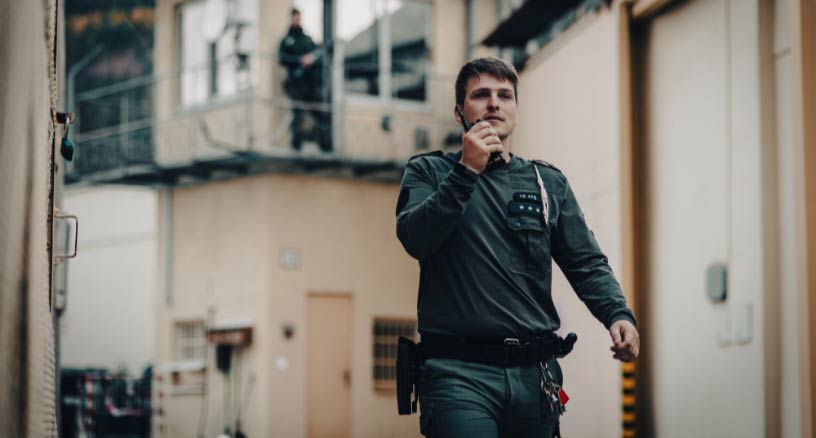
How staff move through a prison has a significant impact on their daily experience, energy levels and sense of control. Congested corridors, blocked walkways, confusing routes and poorly located equipment add unnecessary stress to already demanding roles. In a setting where quick decisions, coordinated responses and constant vigilance are essential, inefficient movement routes can increase frustration, slow down key tasks and heighten operational pressure.
Equally, the quality and accessibility of staff facilities – break rooms, kitchens, hydration points, gyms and quiet spaces – strongly influence morale, recovery and resilience. Thoughtfully designed environments help staff decompress, maintain physical health and manage the emotional intensity of custodial work. When prisons invest in safe, comfortable and practical staff spaces, it sends a clear message that staff wellbeing, dignity and performance are valued and supported.
Optional ideas informed by the EuroPris Staff Wellbeing Expert Group to help you explore the topic further and adapt approaches to your own prison service.
Design movement routes that reduce congestion and daily stress (e.g. mapping busy periods such as shift changes or meal times and creating clearer, wider or alternative routes to ease pressure).
Use clear signage and directions to make moving around the prison easier (e.g. installing simple, visible signs and markers so staff can navigate quickly without confusion).
Create protected staff‑only corridors or stairwells to improve safety and efficiency (e.g. reserving specific routes for staff movement during peak activity or high‑risk operations).
Place essential equipment and documents in accessible, low‑risk locations (e.g. keeping radios, PPE, keys or logbooks close to duty points so staff don’t waste time travelling across the prison).
Invest in high‑quality break rooms that support recovery and morale (e.g. providing clean, comfortable areas with hydration points, microwaves, charging stations and supportive seating).
Provide accessible fitness or exercise spaces to support health and resilience (e.g. small gyms, multi‑use rooms or simple equipment for stretching or light exercise).
Offer private, quiet rooms for decompression after difficult incidents (e.g. creating calm spaces away from noise where staff can briefly regroup before returning to duty).
Design shared staff areas that encourage teamwork and healthy interaction (e.g. arranging furniture to support conversation while avoiding overcrowding and noise build‑up).
Provide a balance of collaborative and quiet spaces to meet different staff needs (e.g. zoning staff rooms to include both group seating and private areas for individual downtime).
Carry out regular accessibility checks to ensure staff areas meet varied needs (e.g. reviewing lighting, door widths, seating, signage and layout to support staff with mobility or sensory requirements).
Appoint an accessibility or disability lead to oversee environmental improvements (e.g. coordinating adjustments, responding to requests and ensuring inclusive design across staff spaces).
Gather and act on staff feedback to ensure spaces reflect operational realities (e.g. asking staff where bottlenecks occur, which rooms are most useful and what improvements would help their day‑to‑day work).
"Well‑designed movement routes and staff spaces reduce daily pressure, improve efficiency and strengthen overall staff wellbeing."
Short examples from the EuroPris Staff Wellbeing Expert Group members showing how wellbeing is being supported across European prisons.
A small selection of materials identified by Expert Group members to support reflection and learning. These are optional starting points rather than endorsements.
CIRIA News (2025). Nature for health and wellbeing in prison environments. [online] YouTube. Available at:
https://www.youtube.com/watch?v=o3bHcTTnPxE
HSE (2019). Have the right workplace facilities – HSE. [online] Hse.gov.uk. Available at:
https://www.hse.gov.uk/simple-health-safety/workplace-facilities/index.htm
Widdop, E.C., Moran, D. and Sadler, J. (2025). Design Principles for Prison Landscapes: Security, Biodiversity and Wellbeing. University of Birmingham. [online] doi:
https://research.birmingham.ac.uk/en/publications/design-principles-for-prison-landscapes-security-biodiversity-and/
REPORT ON PRISON DESIGN EuroPris Expert Group Real Estate and Logistics EuroPris Expert Group Real Estate and Logistics. (2017). Available at:
https://www.europris.org/wp-content/uploads/2025/03/Prison-Design-report-1.pdf
Onsite-hq.com. (2024). Available at:
https://www.onsite-hq.com/insights/the-role-of-workplace-wellbeing-in-modern-facility-management
Green prisons A guide to creating environmentally sustainable prisons. (n.d.). Available at:
https://unicri.org/sites/default/files/2025-03/Guide-Green-Prisons-Mar-2025.pdf
Do you have a tool, example, or suggestion related to this topic?
We’re always looking for new ideas and real-world experiences to expand and improve this handbook.
Use the form to: